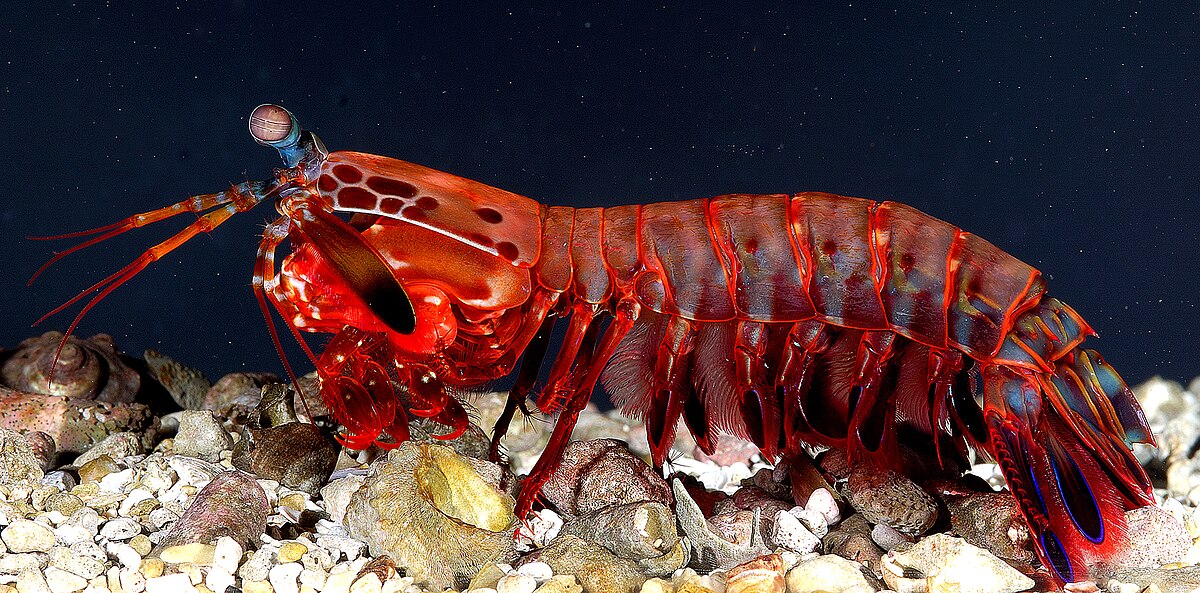
Mantis shrimp are among the ocean’s most fascinating creatures. Known for their vibrant colours, alien-like eyes, and incredibly fast strikes, these marine predators have captured the attention of scientists, divers, and marine life enthusiasts alike. While often grouped, mantis shrimp are divided into two main categories, spearers and smashers, based on the type of weaponry they use to capture prey. If you’re looking to explore more about their hunting style and behaviour, check out this guide to the spearing mantis shrimp for a deeper dive into how these stealthy predators operate.
What Are Mantis Shrimp
Despite the name, mantis shrimp are not true shrimp. They belong to the order Stomatopoda, and they’ve existed for over 400 million years. Their evolutionary history has fine-tuned them into some of the most effective ambush predators in the marine world. Ranging in size from 2 inches to over a foot long, mantis shrimp are found mostly in tropical and subtropical waters.
Divers often encounter them while exploring sandy bottoms or reef structures. Places like Lembeh Resort in Indonesia are especially renowned for macro diving and spotting rare species, including various types of mantis shrimp.
Mantis shrimp are particularly known for:
- Their extremely fast and powerful strikes
- Their extraordinary vision, which can detect polarised and multispectral light
- Their aggressive and territorial behaviour, especially when defending their burrows
Main Difference Between Spearer and Smasher Mantis Shrimp
Although they share similar body plans, the spearer and smasher mantis shrimp have evolved drastically different weapons and behaviours. Here’s a quick breakdown of the main differences between the two:
| Feature | Spearer Mantis Shrimp | Smashing Mantis Shrimp |
| Weapon Type | Sharp, spear-like appendages | Club-like, hammering limbs |
| Prey Type | Soft-bodied prey (fish, worms) | Hard-shelled prey (crabs, snails) |
| Strike Method | Piercing, impaling | Blunt force, smashing |
| Body Shape | Elongated, sleek | Stockier, more robust |
| Burrow Type | Deep burrows in soft sand | Rock crevices or coral rubble |
| Behavior | Ambush hunter, stealthy | Active, confrontational |
Spearer Mantis Shrimp Explained
Hunting Style
Spearers rely on stealth and precision. They construct vertical burrows in soft sediment, such as sand or mud, and wait patiently for prey to pass by. When the moment is right, they lunge upward and use their sharp, barbed appendages to impale unsuspecting fish or worms. These raptorial limbs strike with such speed and accuracy that the prey rarely has time to react.
This method of hunting is akin to a sniper’s ambush, deadly, efficient, and lightning-fast.
Physical Characteristics
Physically, spearers are adapted for quick lunging and soft-bodied prey. They often have:
- Appendages that resemble slender harpoons, equipped with spines to grip slippery prey
- Streamlined, elongated bodies to facilitate quick vertical movements from their burrows
- Camouflage colouration to blend into their sandy or muddy environments
One of the largest and most recognised spearers is Lysiosquillina maculata, also known as the zebra mantis shrimp.
Habitat and Behaviour
Spearers prefer calm, sandy areas where they can dig long burrows, sometimes over a meter deep. These predators are generally solitary and reclusive, rarely venturing far from their hideouts. Their behaviour is calculated; they spend most of their time hidden, only emerging when they sense the vibrations of nearby prey.
For divers hoping to spot these elusive creatures, staying still and watching the sand carefully is key, especially in muck diving hotspots like Lembeh Resort, where rare macro life is often just beneath the surface.
Smashing Mantis Shrimp Explained
Hunting Style
Smashers take a very different approach. They don’t wait for prey to come to them, they go out and actively hunt or scavenge. Their weapon of choice is a heavily calcified club, which they use to deliver rapid, high-force strikes. This allows them to crack open the hard shells of crabs, snails, and other armoured sea creatures.
The force generated by a smasher’s strike is so intense that it causes cavitation bubbles, which collapse with a second powerful burst of energy, further stunning or killing the prey.
Physical Characteristics
Smashers are built for brute strength and short-range combat. Their features include:
- Clubbed appendages capable of striking with the speed of a bullet
- A stocky, muscular body to absorb and deliver shock energy
- Brightly colored carapaces, which can vary from neon green to orange or red
They are truly the brawlers of the mantis shrimp world.
Habitat and Behaviour
Smashers usually inhabit coral rubble or rocky crevices, where they can retreat and defend themselves. They’re known to be bold and territorial, often confronting perceived threats head-on. This assertive behaviour makes them more visible to divers, and they’re a popular sight in reef diving locations.
Because of their strength, they’ve been nicknamed “thumb-splitters” by fishermen and aquarists alike.
Which Is More Dangerous
While both types of mantis shrimp are dangerous to their prey, smashers pose more risk to humans and aquarium setups. Their ability to break open hard shells also extends to cracking aquarium glass if they feel threatened or bored. In contrast, spearers are more elusive and less likely to interact with humans, but their spear-like strikes can still cause serious injury to small tank mates or careless handlers.
In nature, both types serve as highly specialised predators, adapted perfectly to their chosen hunting techniques.
Can They Be Kept in Aquariums
Yes, mantis shrimp can be kept in aquariums, but they are not for beginners. These are powerful, intelligent creatures that require careful consideration.
- Smashers are the more popular choice due to their striking behaviour and colourful appearance. However, they need:
- Reinforced tanks (preferably acrylic)
- Solitary setups (they will attack tank mates)
- Plenty of hiding spots made from live rock or artificial shelters
- Spearers are harder to keep. They require:
- A deep sand substrate for burrowing
- Minimal light exposure and low disturbance
- A vertically oriented tank for natural behaviour
Both types are best kept alone, as they are territorial and predatory by nature.
Conclusion
Spearer and smasher mantis shrimp represent two paths of evolutionary perfection. One uses speed and stealth to impale its prey, while the other relies on brute strength and aggression to crack open armour. Each has developed specialised anatomy, behaviour, and habitat preferences that make them effective in different marine environments.
Whether you’re a diver spotting them in places like Lembeh Resort or an aquarist considering one as a marine pet, knowing the difference between these two types is key to appreciating their uniqueness and respecting their power.
FAQ
What do spearer mantis shrimp eat?
They mainly feed on soft-bodied prey like small fish, marine worms, and shrimp.
Can a mantis shrimp break glass?
Yes. Smasher mantis shrimp can deliver punches strong enough to crack or shatter standard aquarium glass.
Are spearer mantis shrimp aggressive?
They are territorial but not openly confrontational. Their method of attack is ambush, not pursuit.