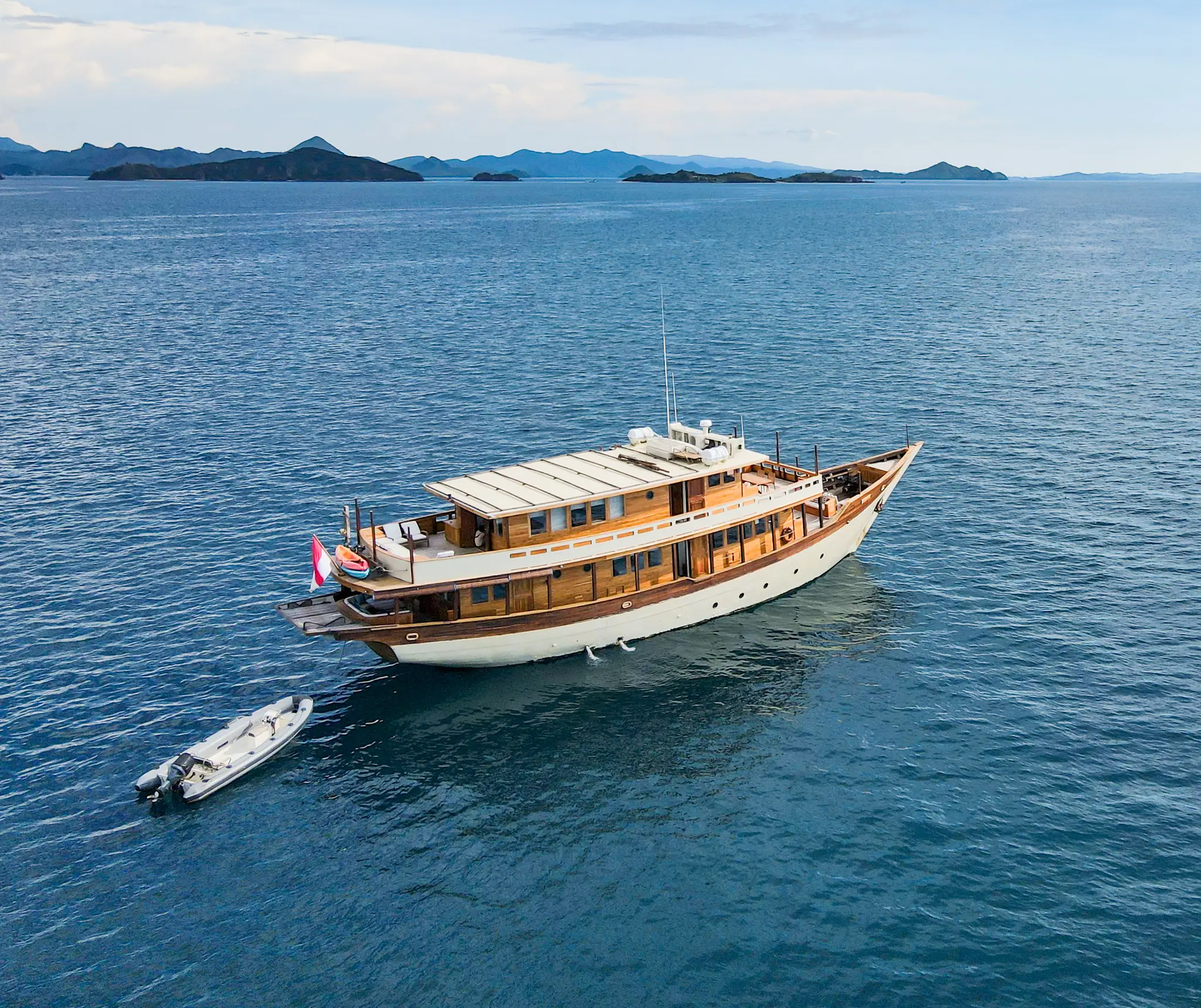
Start your planning with this guide to diving in Komodo National Park, where manta cleaning stations, current-swept pinnacles, turtles, sharks, and colorful coral reefs can shape very different underwater experiences.
A liveaboard dive trip in Komodo is not simply about choosing the longest itinerary or ticking off famous dive sites. The smartest route is the one that matches the marine life you most want to encounter. Komodo National Park is part of one of Indonesia’s richest marine environments, with more than 1,000 species of bony fish and over 260 species of reef-building coral. Its strong currents and nutrient-rich waters also support turtles, sharks, rays, dolphins, whales, and dugongs.
Start With the Marine Life You Want Most
Before comparing boats or departure dates, decide which encounters matter most. A diver hoping to spend time with manta rays needs a different route than someone seeking schooling pelagic fish, dramatic coral landscapes, or macro photography.
Komodo is not a uniform diving area. Conditions vary across the northern, central, and southern sections of the park, and currents, water temperature, visibility, and exposure can influence what divers encounter.
This makes flexibility an important part of route selection. Rather than choosing an itinerary only because it includes famous dive-site names, look for a schedule that can adapt to conditions.
Choose Central Komodo for Manta Rays and Variety
If manta rays are high on your wish list, Central Komodo deserves particular attention.
Hello Flores highlights Mauan, opposite Siaba Besar, as a manta cleaning station where rays may circle while small cleaner fish remove parasites. The site also offers opportunities to encounter turtles, scorpionfish, soft corals, and other reef life. Nearby, Siaba Besar is known for shallower coral environments and frequent green turtle encounters.
For many travelers, this is where a liveaboard dive trip becomes especially valuable. Staying aboard allows an itinerary to spend more time around productive diving areas and potentially adjust the schedule when tides and conditions are more favorable.
Central Komodo can also work naturally within a broader Komodo tour, balancing underwater exploration with some of the region’s best-known land experiences.
Head North for Currents and Pelagic Action
Divers who enjoy reef sharks, schooling tuna, trevally, barracuda, and energetic diving may want more time in northern Komodo.
Castle Rock, for example, is an underwater pinnacle where Hello Flores highlights reef sharks, tuna, barracuda, giant trevally, and other large marine life. Crystal Rock is also recommended for experienced divers because of its strong currents and active pelagic environment.
Rather than asking only whether these sites appear on the itinerary, ask how the operator plans dives around current direction and local conditions.
A marine-life-focused liveaboard dive trip should follow conditions rather than a rigid list of locations. Experienced guides can adjust the dive sequence as needed, helping balance safety with the opportunity for rewarding marine encounters.
Explore Southern Komodo for a Different Underwater Experience
Southern Komodo can reveal another side of the national park. Changes in water conditions and underwater environments mean divers can experience very different marine landscapes within the same destination.
That variety is valuable for travelers who want more than repeated reef dives. A route covering several areas can reveal how Komodo’s underwater character changes from one section of the park to another.
For travelers comparing a Komodo Island tour with a dedicated diving itinerary, this distinction matters. A sightseeing-focused schedule may prioritize land attractions, while a diving itinerary needs enough time and flexibility to reach suitable underwater locations.
Do Not Overlook Macro Life and Photography
Komodo’s reputation for mantas, sharks, currents, and schooling fish can overshadow its smaller underwater subjects.
Protected reefs and slower dives can provide opportunities for photographers interested in nudibranchs, crustaceans, scorpionfish, cuttlefish, and detailed coral scenes. Hello Flores, for example, notes flamboyant cuttlefish and stonefish around Siaba Besar.
If underwater photography is your priority, tell the operator before booking. Your ideal route may require slower-paced dives, repeat visits, suitable guide ratios, and groups organized around similar interests.
This is another reason a liveaboard dive trip can work well for dedicated photographers: the itinerary can give more attention to underwater experiences rather than simply moving quickly between tourist landmarks.
Match the Route to Your Diving Experience
Marine-life goals should never come before safety.
Several well-known Komodo sites can involve strong currents and drift diving. Hello Flores specifically describes Crystal Rock as suitable for advanced divers due to current conditions, while Cauldron is known as a drift dive whose direction changes with the current.
Before booking, ask about:
- Recommended certification level
- Suggested number of logged dives
- Guide-to-diver ratio
- Nitrox availability
- Current-diving experience
- How groups are divided by ability
A strong operator should explain why particular sites are appropriate for your experience level rather than promising access to every famous location.
Combine Diving With Komodo’s Land Highlights
A dive-focused journey does not mean ignoring the scenery above water.
A stop on Komodo Island can introduce the park’s famous terrestrial wildlife, while Padar Island offers one of the region’s most recognizable viewpoints. UNESCO identifies Komodo, Rinca, and Padar as the park’s three major islands, surrounded by numerous smaller volcanic islands.
If you are organizing a Labuan Bajo trip, compare itineraries carefully. An open trip Labuan Bajo option may focus more heavily on sightseeing and group travel, while a specialized Komodo boat tour may dedicate more time to snorkeling or diving.
Likewise, a general Komodo tour package or Labuan Bajo tour may visit several iconic landmarks but provide fewer opportunities for serious diving.
The best choice depends on whether your priority is marine life, sightseeing, or a balance between the two.
Ask the Right Questions Before Booking
Before confirming your route, ask which marine encounter the itinerary is designed around, how many dives are planned, and whether the schedule can change based on weather, currents, and wildlife conditions.
You should also ask whether your chosen sites match your certification level and whether the operator can spend additional time in productive areas when conditions allow.
There is no single perfect Komodo itinerary. A manta enthusiast, macro photographer, shark lover, and first-time diver could all choose different routes and still experience the destination at its best.
The key is to start with the marine life you care about most, then select the route, diving areas, boat, and guide team that can realistically support those priorities. In Komodo, flexibility can be just as valuable as the destination list itself.